ARTISTS


“The Edwardians: Age of Elegance” at The King’s Gallery
An exhibition at The King’s Gallery explores the opulence and artistry of the Edwardian age through its royal collections
Benjamin Blake Evemy / MutualArt
11 Nov, 2025
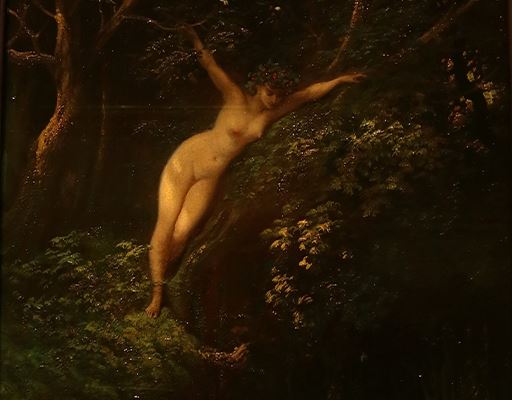
A nude nymph admires her lithe figure in a woodland pool; a gilded throne sits empty, snarling lions forever missing the touch of royal hands; a chimera spreads her thorny wings in bronze-cast self-portrait; coveted jewels and colonial riches await the ever-curious: The King’s Gallery, Buckingham Palace, presents for the public’s pleasure, all the decadence and elegance of the Edwardian era in their first ever exhibition of the period, The Edwardians: Age of Elegance.
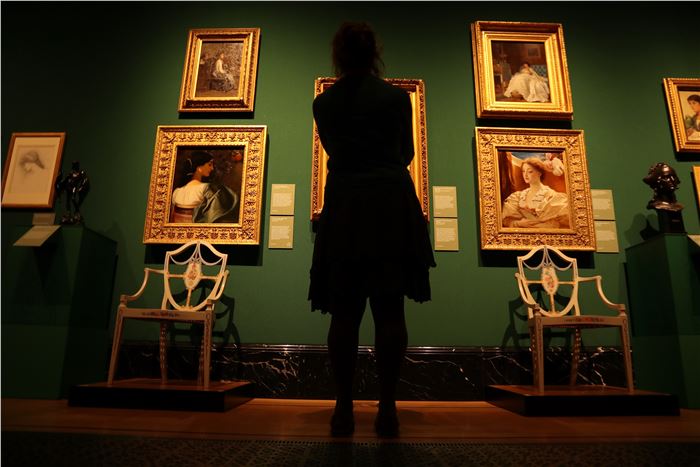 An admirer at The Edwardians: Age of Elegance, The King’s Gallery, Buckingham Palace. Photograph by the author.
The Royal Collection Trust has collated over three-hundred items from the personal collections of two royal couples: King Edward VII and Queen Alexandra, and King George V and Queen Mary. The eclectic mix of sculpture, paintings, photographs, books, ceramics, jewelry, and fashion – along with the gallery they are presented in – make for an experience that seems less like an exhibition and more like wandering through the personal quarters of a blue-blooded family of a bygone era. Everyday items such as a Fabergé cigarette case in royal azure – replete with gilded bejeweled serpent, or a pencil case by Cartier bearing the crown, further add to this effect.

Sèvres Porcelain Factory, Le Parnasse (Parnassus), 1911-13, Biscuit porcelain. Royal Collection Trust. Photograph by the author.
Upon soon entering the exhibition, visitors will likely spy Le Parnasse (Parnassus) - a stunning porcelain piece given as a Coronation gift by French President Poincaré to King George V and Queen Mary. Le Parnasse (Parnassus) is a recreation of an 18th-century centerpiece originally made for Catherine the Great of Russia. Although the two pieces do differ: in the earlier incarnation, the classical column was crowned with a bust of Catherine, while in the version seen in the exhibition, the column supports Minerva, Roman goddess of wisdom.
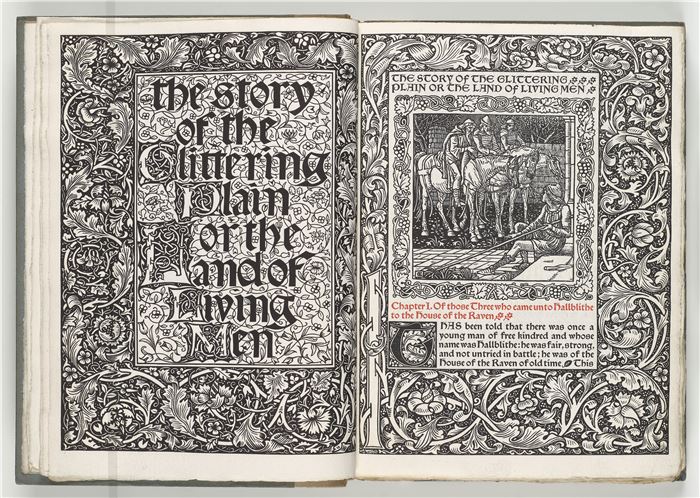 William Morris, The Story of the Glittering Plain, 1894. © Royal Collection Enterprises Limited 2024 | Royal Collection Trust
Certain items on exhibit that may not at first catch your attention, may very well prove to be the things that most impress you. This is certainly the case with a couple of well-thumbed hardcovers. The first being a rare edition of the inaugural book printed by William Morris’s Kelmscott Press, the second, a personally inscribed copy of Oscar Wilde’s Poems. These books serve as physical evidence of the Edwardian’s passion and patronage of the arts. King Edward VII understood well the importance of cultural progression, in 1902 forming the Order of Merit, which aim was to recognize significant contributions to scientific, cultural, or military life. Alongside the official honor received, a portrait of each recipient was drawn for the King, a tradition that still lives on.
.jpg)
Paul-Gustave-Louis-Christophe-Doré, La Nymphe et la Source, 1868-74, oil on panel. Royal Collection Trust. Photograph by the author.
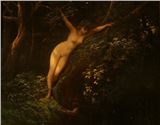
One of the most stunning paintings to be found in the exhibition, is an oil on panel piece by Gustave Doré. A stripped nymph leans against a moss-thick twisted bole above a darkened spring, and not unlike Narcissus, gazing down at her reflection in the water’s surface. The piece’s beauty is found in its subtlety: the way the light spills through the foliage of the forest canopy above, landing in soft streaks upon the thigh; in the way that the subject’s trunk and limbs are delicately positioned to take on the appearance of a tree itself. A wreath of holly crowns her head, further signifying her woodland connection. King Edward VII was an ardent admirer of Doré’s work, and the two had met during social occasions in both Paris and London.
Other artistic highlights include the previously unseen Study of a female head, by the renowned Pre-Raphaelite, Sir Edward Burne-Jones; a darkly enchanting portrait by Sir Frederic Leighton completed in his studio in Rome in 1859, entitled Nanna (Pavonia), as well as its much lighter companion piece, Bianca; Sir Lawrence Alma-Tadema’s Mediterranean-set God Speed; and the decidedly luxe piece by Belgian painter Charles Baugniet, ‘After the Ball’: a Lady in a Ballgown Asleep on a Sofa.
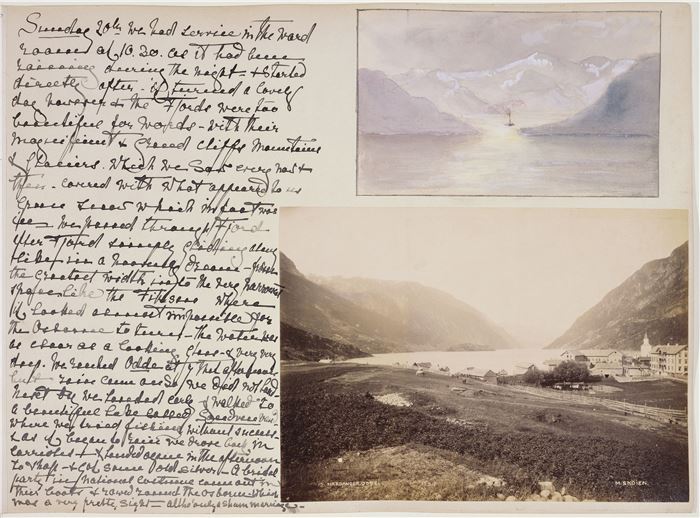 Queen Alexandra, Norwegian Cruise Album - Odda on Hardanger Fjord in Norway, and crew members, 1893. © Royal Collection Enterprises Limited 2024 | Royal Collection Trust
King Edward VII and Queen Alexandra, as well as King George V and Queen Mary, travelled more extensively than the royals that came before. As is typical of touring, they were presented with many gifts, as well as taking the opportunity to add an array of exotic objects to their personal collections. Additionally, they were accompanied by official tour photographers and artists. The exhibition presents items collected from travels on five continents, such as the gorgeous Egyptian scarab brooch given as gift to Queen Alexandra in 1863 by Edward after a tour of the Middle East. Also of particular interest, are watercolors, handwritten notes, and photographs taken by Alexandra in 1893, following a visit to Norway.
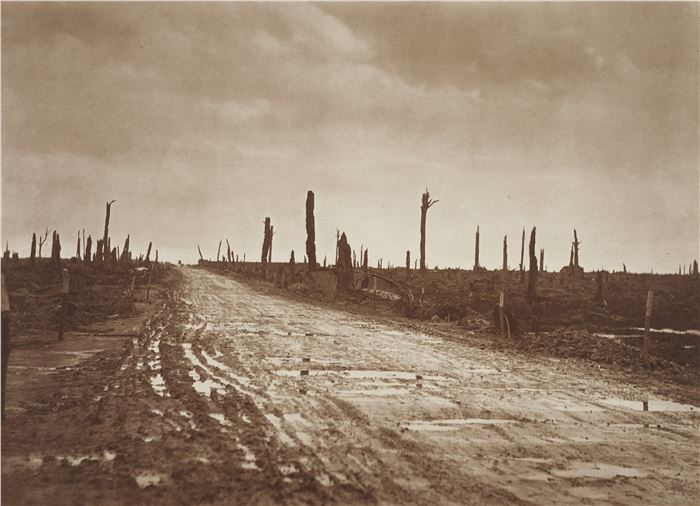 Olive Edis, The Menin Road, 1919. Credit: Royal Collection Trust / All Rights Reserved
The sumptuous extravagance of the Edwardian age was suddenly shattered when Britain found itself in the throes of the Great War. Subsequently, the royal family witnessed their collection taking on a much more somber tone - the photography of Olive Edis being an apt example. The country’s first official female war photographer documented the aftermath of WWI, creating decidedly haunting images of a war-torn continent. The Menin Road is a particularly poignant piece, a mud-thick road stretches through a deserted battlefield of truncated trees into a pale horizon, beneath a brooding, overcast sky. The photograph’s sepia tone rendering of an almost surreal landscape may evoke dream-like stirrings within the viewer, but the image is very much a capturing of a slow-fading nightmare.
In recent years, the Royal Collection Trust, with support of His Majesty the King, has placed significant focus on ensuring that as many people as possible can access, and subsequently benefit, from the Collection. This includes offering £1 tickets to the exhibition to those receiving Universal Credit and other named benefits during two particular time windows. This second window is currently open and runs until The Edwardians: Age of Elegance closes on November 23.
For more on auctions, exhibitions, and current trends, visit our Magazine Page